


There’s a difference between cleaning your house and having a system for cleaning your home.
Most people do the first one, a bit of vacuuming when the floors look bad, a wipe of the bathroom when company’s coming, a frantic kitchen blitz on Sunday night. It works until it doesn’t, and then you’re spending an entire weekend catching up.
A proper house cleaning checklist takes the guesswork out. Instead of looking around and wondering what needs doing, you know exactly what to clean, how often, and in what order. It means less time cleaning overall, a home that actually stays clean between sessions, and no more Sunday dread.
This room-by-room cleaning guide is built for homeowners, accounting for the kind of build-up that happens in family homes. And because we’re based in Geelong, it includes the seasonal factors that specifically affect homes along the coast: salt air, sand, humidity, and the dust that blows through in the warmer months.
Why a Cleaning Schedule Matters
The biggest mistake people make isn’t using the wrong products or missing a spot. It’s not having a house cleaning schedule at all.
Without a schedule, cleaning becomes reactive. You clean when things look dirty, which means grime has already built up by the time you get to it. That makes every session harder and longer than it needs to be.
A good weekly cleaning routine flips that around. You clean before things get bad, which means each task takes less time and less effort. The oven that takes 45 minutes to scrub after three months of build-up takes ten minutes if you wipe it down monthly.
The checklist below is split into frequency tiers (daily, weekly, fortnightly, and monthly) so you can see exactly what needs attention and when. You don’t need to do everything on this list yourself (that’s what professional deep cleaning is for), but knowing what your home needs and how often is the first step.
Kitchen
The kitchen generates more mess than any other room and needs the most frequent attention. Here’s how to break it down so it never gets ahead of you.
Daily
- Wipe down benchtops and stovetop after cooking
- Wash dishes or run the dishwasher
- Quick wipe of the sink
- Sweep the floor if there are visible crumbs
Weekly
- Clean the splashback (the full thing, not just behind the stove)
- Mop the floor
- Wipe the exterior of appliances (microwave, fridge, dishwasher)
- Wipe cabinet handles and high-touch surfaces
- Empty and clean the bin
Fortnightly
- Clean inside the microwave
- Wipe down the rangehood exterior and underside
Monthly
- Clean the rangehood filter (soak in hot water with dish soap and bicarb)
- Wipe inside the fridge, check expiry dates, and clean shelves
- Clean the dishwasher filter and run an empty hot cycle with vinegar
- Wipe the tops of cupboards (especially if they don’t go to the ceiling)
- Clean kickboards at the base of cabinets
Every 2–3 months
- Deep clean the oven interior, racks, and door glass
- Pull out the fridge and clean behind and underneath
- Move benchtop appliances and clean the wall and surface behind them
Vacmate Tip: If you live on the Bellarine or Surf Coast, salt air accelerates the build-up of a sticky, greasy film on surfaces near the stove and rangehood. You may need to degrease the rangehood filter more often, every six to eight weeks instead of monthly.
Bathroom
Bathrooms are small rooms that get dirty fast. A consistent weekly cleaning routine keeps mould, limescale, and soap scum from becoming a bigger job.
Daily
- Squeegee the shower screen after use (this single habit prevents 80% of limescale build-up)
- Wipe the vanity if there’s toothpaste or product residue
- Hang towels to dry properly (bunched towels grow mould and smell)
Weekly
- Clean the toilet, including bowl, seat, exterior, and base
- Spray and wipe the shower screen
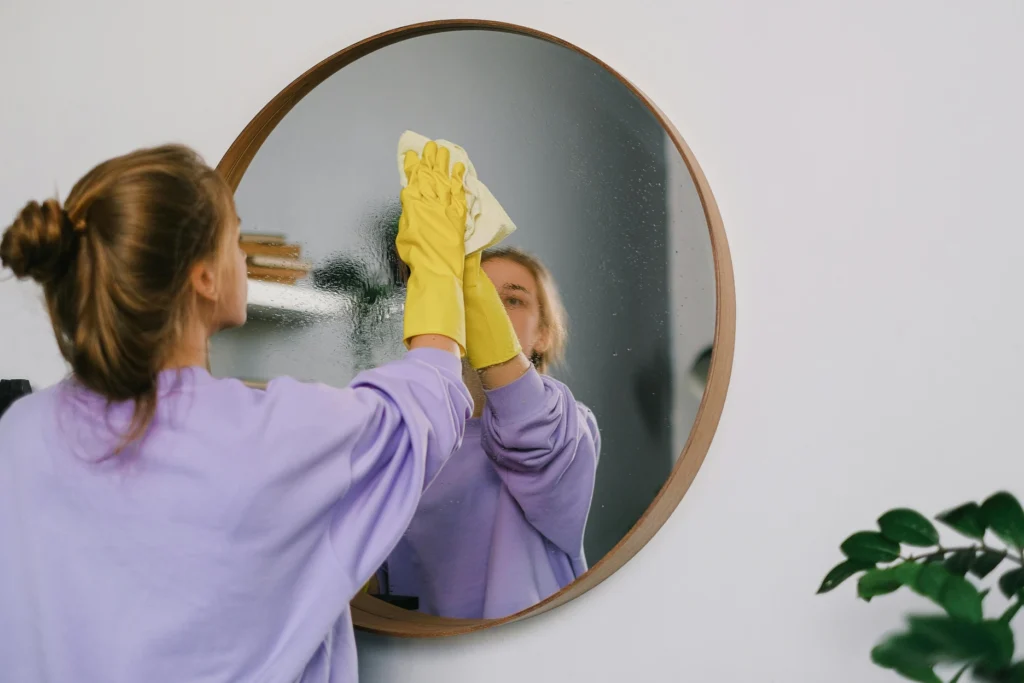
- Wipe the vanity, mirror, and tapware
- Mop the floor
- Wipe any visible soap scum off tiles
Fortnightly
- Scrub tile grout in the shower and around the bath
- Descale tapware and the showerhead (vinegar-soaked cloth for 15 minutes)
- Wipe down the shower door tracks or channels
Monthly
- Clean the exhaust fan cover and blades
- Check silicone seals around the shower base and bath for mould
- Wipe inside vanity drawers and cupboards
- Clean the toilet S-bend area and behind the cistern
Vacmate Tip: Humidity is higher in homes near the water, especially throughout autumn and winter. Run the exhaust fan for at least 15 minutes after every shower and check grout and silicone monthly for early signs of mould. Catching it early is a five-minute fix. Leaving it becomes a re-siliconing job.
Bedrooms
Bedrooms are lower maintenance than kitchens and bathrooms, but they collect dust quickly, especially in carpeted rooms.
Daily
- Make the bed
- Put clothes away (laundry basket, wardrobe, or drawer, not the floor or “the chair”)
Weekly
- Vacuum floors and rugs
- Dust bedside tables and visible surfaces
- Change bed linen
Fortnightly
- Dust skirting boards
- Wipe light switches and door handles
- Vacuum under the bed
Monthly
- Dust ceiling fans and light fittings
- Wipe window sills and tracks
- Dust or wipe blinds
- Vacuum inside built-in wardrobes
- Flip or rotate the mattress (check manufacturer’s instructions, not all mattresses need this)
Living Areas
Living areas are where your house cleaning checklist pays off the most. These rooms are used constantly, and they’re the first thing guests see.
Daily
- Quick tidy, put cushions back in place, remotes grouped, blankets folded
- Spot-clean any spills on the couch or floor
Weekly
- Vacuum all floors, rugs, and under couch cushions
- Dust surfaces (TV unit, coffee table, shelves, side tables)
- Mop hard floors
- Wipe the TV screen with a dry microfibre cloth
Fortnightly
- Dust skirting boards
- Wipe light switches and power points
- Vacuum or wipe couch fabric (use a lint roller for pet hair)
Monthly
- Dust ceiling fans, cornices, and light fittings
- Clean window sills and tracks
- Dust or wipe blinds slat by slat
- Wipe doors on both sides
- Remove cobwebs from ceilings and corners
- Clean air conditioning vents and filters
Vacmate Tip: If you run air conditioning regularly (and most coastal homes do through summer), check the filters monthly. Salt air and dust clog them faster than in inland suburbs, and a blocked filter means your unit works harder, costs more to run, and circulates dust instead of filtering it.
Laundry and Utility Areas
The laundry tends to be the room that gets cleaned last, if at all. But lint, moisture, and detergent residue build up fast, and a neglected laundry can become a mould problem.
Weekly
- Wipe the top of the washing machine and dryer
- Clear the dryer lint filter (this should really be after every load)
- Mop the floor
Monthly
- Run an empty hot wash cycle with a cup of white vinegar to clean the washing machine drum
- Wipe inside the door seal of front-loaders (mould grows here constantly)
- Wipe the laundry sink and tapware
- Check behind the machines for dust build-up
Seasonal Cleaning Calendar: What Changes Throughout the Year
This is where a home cleaning schedule gets smart. Some tasks are seasonal and don’t need doing every month, and in coastal areas of Geelong, the Bellarine, and the Surf Coast, the climate drives what needs extra attention and when.
| Season | Focus Areas | Why |
| Summer | Air con filters, window tracks, outdoor entertaining areas, ceiling fans | More dust, more sand, more airflow through open windows. Outdoor areas used heavily. |
| Autumn | Gutters, exhaust fans, mould-prone areas (bathroom, laundry), door seals | Humidity rises, leaves block drainage, moisture increases indoors. |
| Winter | Inside windows (condensation), rangehood filter, carpet deep clean, heater vents | Condensation builds on glass, cooking increases (more grease), carpets hold moisture. |
| Spring | Full deep clean, blinds, skirting boards, light fittings, behind furniture | Classic reset season. Dust and grime from winter needs clearing before summer. |
If you only do one deep clean a year, make it spring. It sets you up for the season when your home gets the most use and the most visitors. But two a year (spring and autumn) is the rhythm we’d recommend for most homes in the region.
Using This Home Cleaning Checklist Without Burning Out
Looking at a comprehensive room-by-room cleaning guide like this can feel overwhelming. That’s normal. The trick is to try not to do everything at once.
- Start with daily habits. These are tiny, two minutes in the kitchen, one minute in the bathroom. They compound quickly and stop mess from building.
- Lock in a weekly cleaning routine. Pick a day (or split it across two days) and stick to it. The weekly tasks are where the real results come from. If you can only commit to one frequency tier, make it weekly.
- Rotate the monthly tasks. You don’t need to do every monthly item on the same day. Tackle one room’s monthly tasks each week, and you’ll cycle through the whole house in a month without ever spending more than 20 minutes on the deeper stuff.
- Know when to hand it over. If our weekly cleaning routine feels like more than you can manage (or if you’d simply rather spend that time elsewhere), professional house cleaning on a fortnightly schedule covers everything on the weekly and fortnightly lists in this checklist. You handle the quick daily habits, and a cleaning team handles the rest.
That’s how most of our Vacmate clients manage it, and it’s the most sustainable approach we’ve seen. A clean home without the weekend being eaten up by it.
Need a hand keeping on top of your house cleaning checklist? Reach out to the Vacmate team on (03) 7050 2742 or at info@vacmate.com.au. We service Geelong, the Bellarine Peninsula, and the Surf Coast, and we’re happy to chat about what would work best for your home.

Ajay moved to Geelong for his Master's in 3D Printing at Deakin University, fell for the region, and inspired by his parents' entrepreneurial spirit, made it home and launched Vacmate Cleaning. Over four years he's built a reliable, customer-focused service and a supportive team, leading with a passion for excellence and real connections with clients and staff. Outside work, he enjoys reading, driving, travelling, and meeting new people.